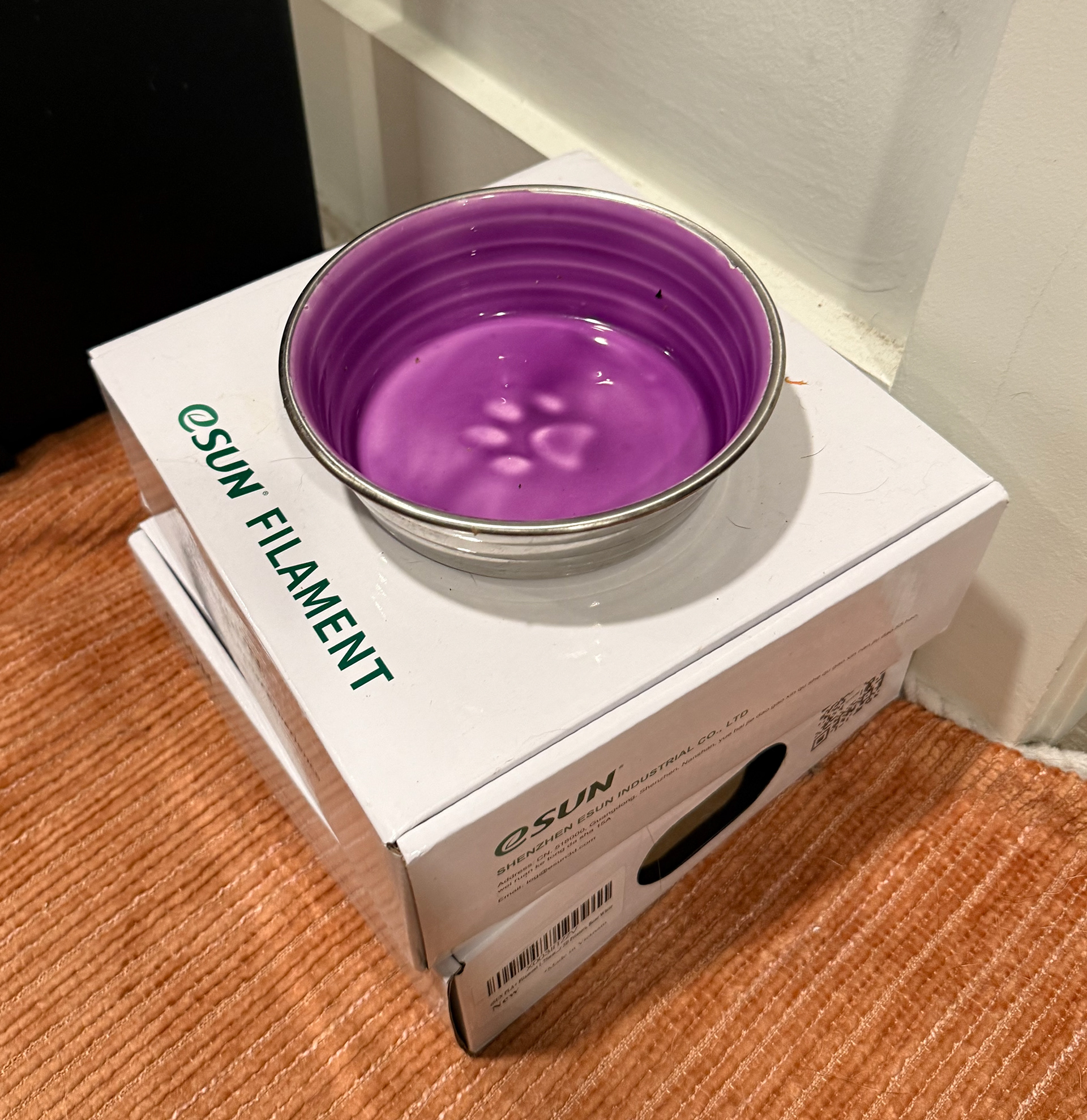
My senior dog, Foxy, recently had an issue with back pain and I was advised that I should elevate her food and water dishes so that she could eat without having to arch over. At first, I propped the dish up on some empty filament spool boxes but I could never get the right height for her, and the dish is pretty small and she pushes on it hard to get the food out, so it always wound up moving or she would knock it over.
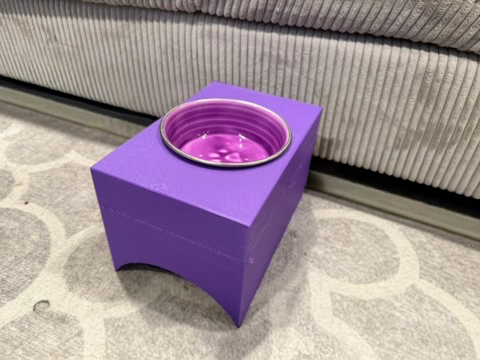
I created a simple holder in OnShape with a couple of arch-shaped cutouts to keep the whole assembly from sliding to the side, but I found a few issues with it:
1) One edge of the holder needed to be braced against furniture so it wouldn't slide front/back, which limited the angles my dog could use to eat. If I put it in the open, the assembly still easily slid from side to side if she applied force in either direction.
2) This design used a lot of material and had a long print time. I made most of it solid to make it heavier to reduce motion when Foxy ate from it, but the print was actually pretty solid without making it so wide and heavy.
3) When moving the assembly, it was awkward to pick the whole thing up from any angle other than from the front (where you could slip your thumb under the arch). I wanted to make it so it would be easy to move when grabbing it from any angle.
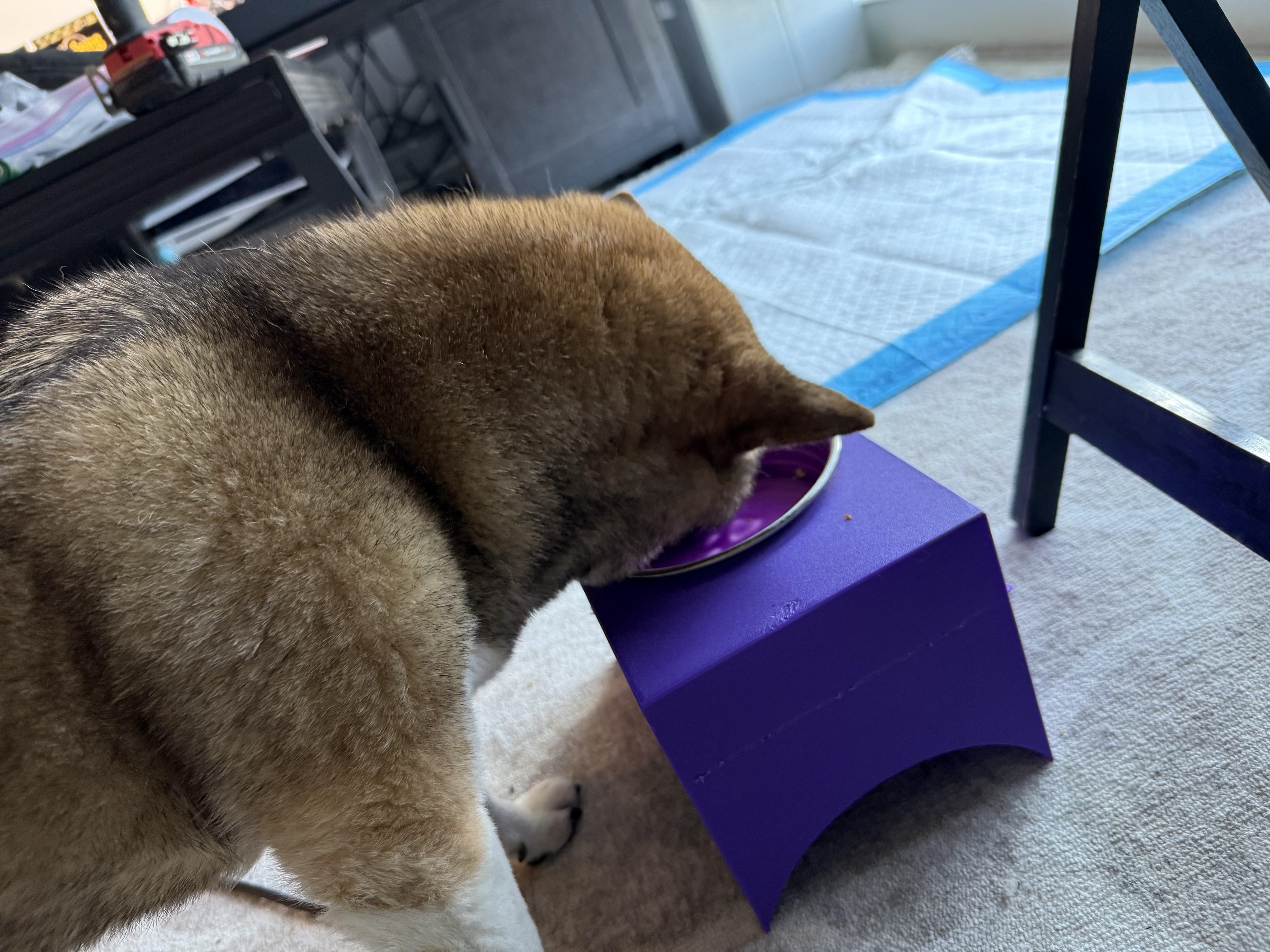
4) The edges around the bowl extended out too far and sometimes made it challenging for Foxy to reach food that settled into the edge of bowl from the front or back.
5) When observing Foxy eating from the v1, I noted Foxy was still having to arch her back a bit to lean into position, so I could go a little taller.
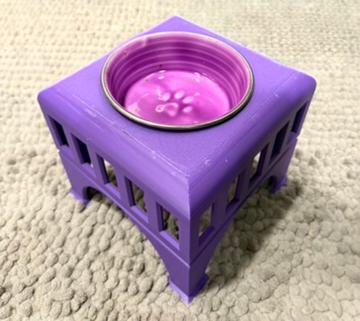
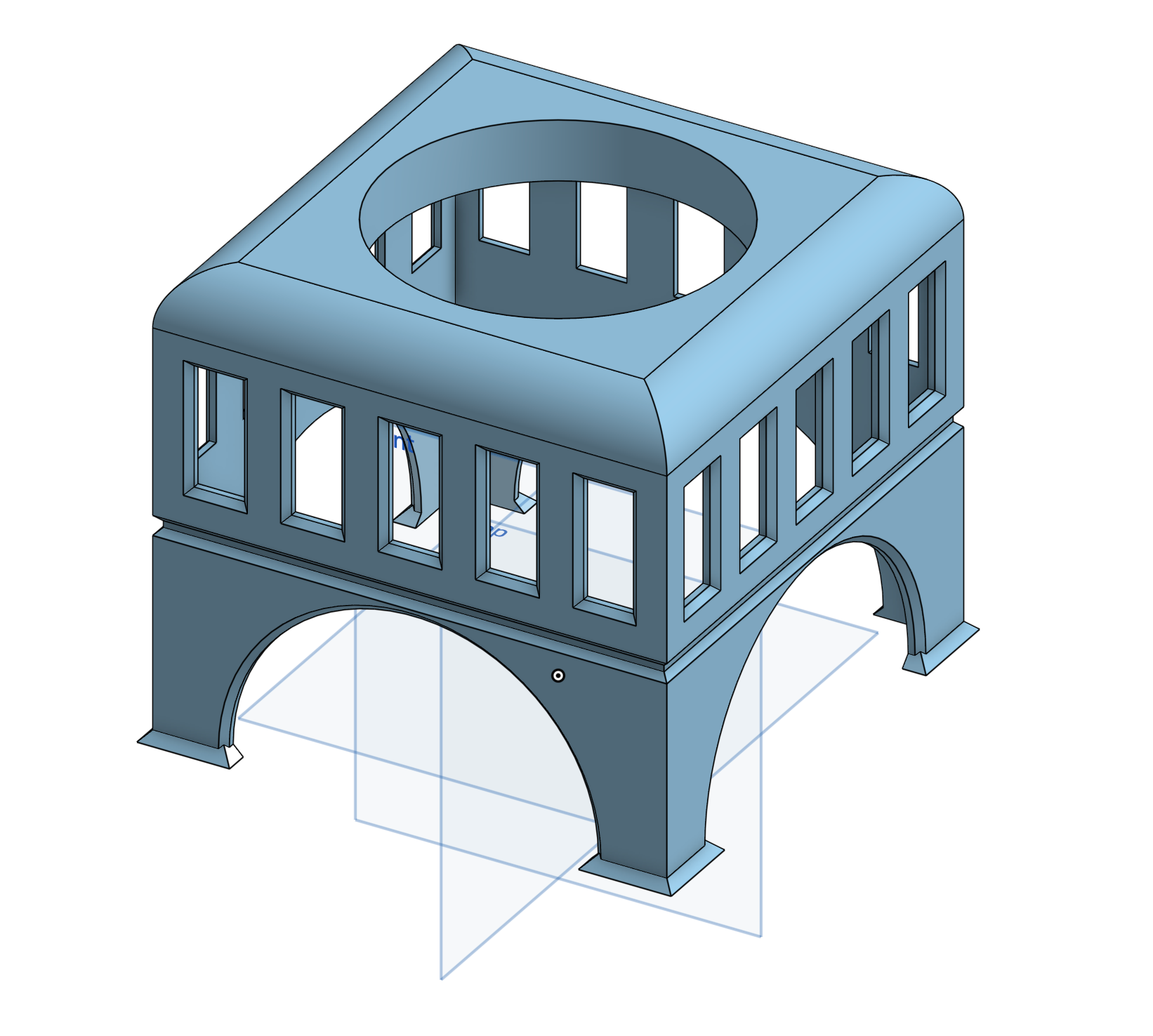
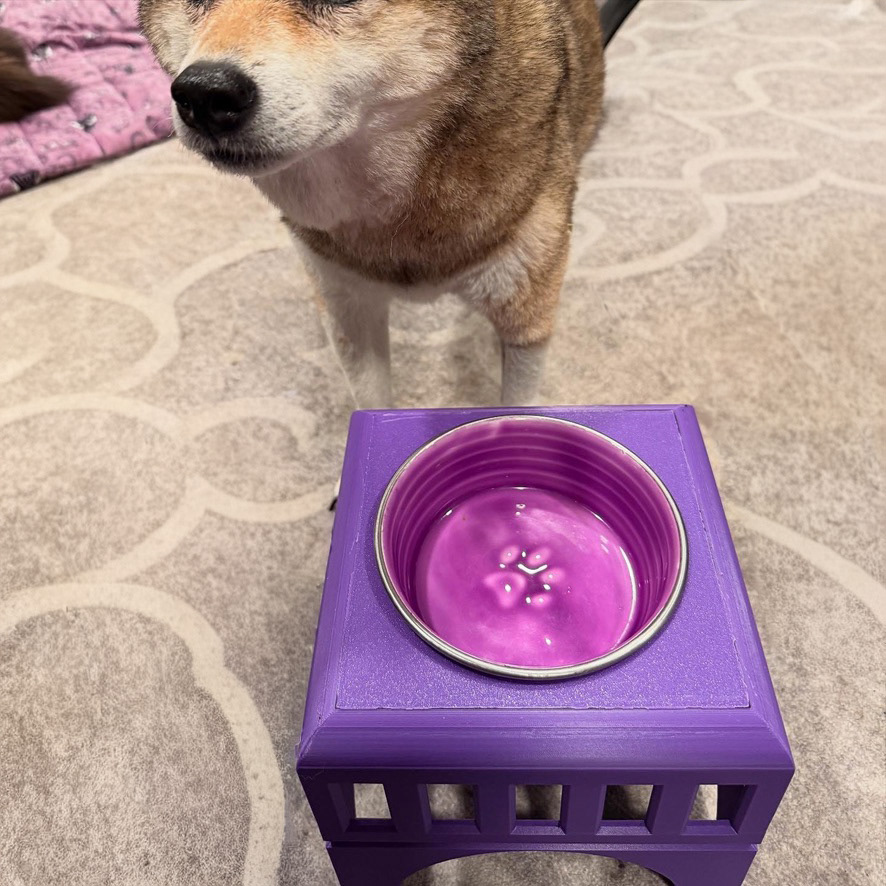
This led to the v2, which used much less material, had short, rounded top edges and featured lots of cutouts which I could use to pick up the assembly easily from any angle. The feet were also redesigned to prevent sliding in all directions, and could be 3D printed without supports.
Insights and ideas for v3:
1) I'd like to use a chamfer for the edges on the top instead of a fillet. I had to use supports for the rounded edges which added a lot to the print time and resulted in some messy edges in the final product. I originally used the fillet to make the edge round but when observing Foxy eat from the assembly, I noted that a chamfer would give her the clearance to access the bowl as well.
2) I want to print the top and the bottom pieces separately so that the height could be adjustable. I sketched out some ideas for the mechanism using screws, gears or just pegs and holes.
3) I might also make the cutouts on the side narrower so the 3D printer can do the overhangs cleanly without supports.